Flash of Steel header image 1

The Old Man and the EA

September 5th, 2008 · No Comments

Jeff Green has been writing about computer games for a very long time. But given the closure of his magazine last year and the continual flood of journalistic talent running to the development side of the industry, his leaving Ziff Davis to join EA and work on The Sims shouldn’t be surprising. He’s always been a fan of the series, his daughter has reviewed Sims titles and only a madman would pass up the opportunity to work on one of gaming’s most successful series at one of the industry’s poshest workplaces.

He will definitely be missed. The PC side of 1up still hasn’t quite righted itself since GfW shut down and Jeff had the heft and credibility to turn that into something special. But the fact that there hasn’t been either a Greenspeak column or new Tom vs. Bruce since the magazine’s end, and that many PC games have come and gone without a review gives me pause. On a personal note, Jeff and I were discussing how I could contribute more to the PC side of the site and I guess I need to find out what to do next.

But here’s a toast to one of the best writers in games journalism. He wasn’t afraid to experiment with the magazine and he loved what he did. He’s one of the many people in this industry who has been good to me and to many other writers. He respected his competitors and knew his stuff and was the dad on the GfW podcast.

Good luck, Mr. Green and give me a shout when Sims 3 is almost done.

→ No CommentsTags: CGW · Electronic Arts · Media

A Question of Leadership

September 2nd, 2008 · 6 Comments

War is a human endeavor, and the quality of the humans in charge matters.

The challenge for game designers has been how to separate the impact of the leader from the quality of the troops under him. What is Patton’s value added to a well trained armor division? How much of Prussia’s power was based on the military reforms and not Frederick’s battlefield brilliance?

In his latest post about the military model in the development of Imperium, Michael Akinde outlines how he intends to reflect both individual qualities and cultural preferences.

The plan is that some cultures (for example Gallic culture and some variants of Hellenistic culture) may have a Heroic ethos, meaning that their armies will actually fight worse if the General does not fight in the front line (reflecting the cultural pressure). Whether fighting in the front line or lurking at the back like a smart Roman, the Combat skill will be important for the General, as it determines the likelihood of the general surviving episodes where his life is put into danger… such as of course in battle.

His model is an familiar one, emphasizing three particular aspects of generalship. It’s not a big leap from Command/Combat/Guile to the Fire/Shock/Maneuver/Siege in Europa Universalis or Ageod’s long list of traits or even the numerical rating for various abilities in Romance of the Three Kingdoms XI. The assumption is that specific types or phases of battle will call on specific skills, each of which will have to be judged independently - as Akinde puts it, “The player should notice, in short, the difference between a Varro and a Hannibal.”

But wherever leaders have been involved, the differences between Varro and Hannibal or Bazaine and Moltke or Haig and Foch have never really been the issue for me. Someone gets bad stats and someone gets good ones. The difference between Pyrrhus and Antiochus matters more; it’s the margins of greatness that will matter to people interested in this sort of game.

Historically based games that deal with leadership have the problem of familiarity. If I am playing a game about the American Revolution, familiarity pushes me to use Francis Marion as a guerrilla leader and Benedict Arnold as a battlefield commander - or maybe resist giving him a command altogether.

But there comes a point where great fame means, for the developer, great stats. And if I can use Francis Marion to tear up British troops in civilized Pennsylvania, then is he still the Swamp Fox or is he just an agglomeration of numbers? What’s his “kill” factor? Paradox got around that by just killing historical leaders for most games; sure you can start with Wallenstein and Tilly, but most people won’t. If Caesar, however, is straight eights or nines, and so is Pompey, then how do you capture the essential differences between the two, the effective recklessness of the former and the efficient caution of the latter? In the war against Hannibal, Fabius and Marcellus had very different approaches, but the only distinction that Akinde’s three numbers would catch would be the latter’s willingness to expose himself to danger - the “combat” variable.

Games are, often, math. Plus here, minus there. And your situation will determine which pluses and minuses matter. But there’s an inevitable disappointment when, say, Hannibal gets killed in a shipwreck at 18. Or when a player decides that Pompey’s administrative brilliance means he’s more useful collecting taxes in Spain than fighting the hordes of Mithridates. In strategy games that use leaders, historicity always runs headlong into player choice. It’s inevitable and desirable; these design conflicts are where brilliance is born.

It’s still much too soon to consider Imperium anything like brilliance. But keep an eye on Akinde’s blog for more as he explains his military strategy.

→ 6 CommentsTags: Ancients · Design · Imperium

What a Difference Six Months Can Make

August 28th, 2008 · 1 Comment

Gamasutra quotes GPG boss Chris Taylor as saying that the PC is “rediscovering itself” as a platform.

He wasn’t so positive about the platform last February.

The two statements don’t directly contradict each other; in February he was talking business but now he’s talking about hardware and install base. But if the business problems are still there, specifically piracy, what does it matter if the average graphics card will do the job that needs to be done?

→ 1 CommentTags: Gas Powered Games · Industry

Building A Commercial Empire

August 28th, 2008 · 1 Comment

East India Company has somehow slipped under my radar. If it weren’t for the updated screenshots on Gamespy, I might have missed it altogether.

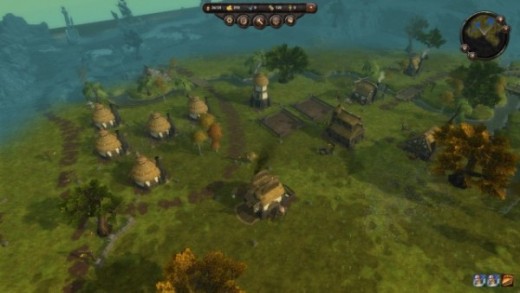
It has naval warfare, just like Empire: Total War, but mostly seems to be a trading game. You set up outposts and make money. This screenshot shows a minimap in the lower left, revealing that the area of expansion includes Africa and the Middle East. Nitro Games warns that the screens may not reflect the final version, but they don’t look too bad.

No clue as to how the diplomacy works in any of the feature lists. How do you deal with African and Indian rulers? Can you form alliances? Why is Italy there?

With a Q1 2009 release target, I wish it luck in not getting buried by Empire: Total War, which comes out next February.

→ 1 CommentTags: Preview

Game Boys

August 28th, 2008 · 3 Comments

My new Print Screen column is up at CG. This time, I review Game Boys, Michael Kane’s account of professional Counterstrike players.

I’ll admit to being a skeptic of pro gaming ever getting big. Kane and his subjects keep making the comparison to Texas Hold ‘Em, a game that wasn’t even the most popular form of poker played in American homes until some genius found a way to make the game compelling to a TV audience. If poker can become huge, why can’t pro gaming just get a little bit bigger?

And maybe it is getting a little bit bigger, but considering how marginal it has been for a long time, that’s no grand accomplishment.

Kane’s real accomplishment is to move beyond the star player model of covering the sport, not doing another puff piece on Fata1ity or any challengers to his endorsement crown. He sees Counterstrike for what it is at its best, a team sport where people have roles to play. He also recognizes that the success of a sport is tied to how easy it is for an audience to appreciate it. Don’t show the players, show the game. So you need to find someway to actually broadcast a sport where ten players can be in ten different places.

Replay software makes it possible to see all this after the game, and Kane mentions how the replays are used in scouting and to preserve legendary moments. But there is still a real challenge to making this palatable to a live audience. Even the CGS founding tournament had to bus in fans and give them cues as to when and what to cheer.

I’m too nice a guy to not wish the sport great success. But I just don’t see it.

The book, though, is a wonderful read.

→ 3 CommentsTags: Crispy Gamer · Print Screen

Under the Hood

August 27th, 2008 · 1 Comment

Michael Akinde, developer of the still not finished Imperium - Rise of Rome, has started blogging about some of the design details of the combat model in his game. The starter post can be found here, and his thoughts on how to reflect troop types and tactics here.

From the second post:

The scouting factor is the final piece in the force model. It is used to determine which of two sides in a conflict have the better intelligence. If one side “outscouts” the other by a significant margin, it will be able to attempt an ambush of their opponent. How much of a margin is required depends on the terrain; thus Romans campaigning in Spain and facing Scutarii and Caetratii units with high scouting factors will have to be extraordinarily careful in their operations. Light infantry and cavalry units will typically have a high scouting factor; while units made up of heavy infantry will struggle.

→ 1 CommentTags: Ancients · Design · Imperium

Mark Noseworthy Points Out the Obvious

August 27th, 2008 · 2 Comments

PC real time strategy games don’t work so well when ported to console platforms.

So don’t expect to see Company of Heroes on your 360 any time soon.

But Dawn of War II isn’t a traditional RTS, so it might work.

→ 2 CommentsTags: Consoles · Design · RTS

Flash of Steel Social Networking - UPDATE

August 27th, 2008 · 4 Comments

Apropos of nothing, I created a Facebook group for Flash of Steel.

Why? Mostly to see what I could do with it. But it will also, hopefully, help my few readers find connections between each other. Plus, the viral nature of social networking might mean friends of readers checking this place out. And more readers means more people to tell me how to do my job better.

EDIT: I’ve been prompted to use the new Blog Networking Application, linked at the top of the right sidebar. Feel free to jump in.

→ 4 CommentsTags: Me

Space Siege Review

August 27th, 2008 · 1 Comment

When I saw Space Siege at E3, it looked like a nice, light Action-RPG. I had no idea how light the complete version would be.

To even call it an RPG is a bit of a stretch. You do have a character that improves over time, but it’s more of a Progress Quest type thing. Stats improve and there’s little debate over what to improve. Your character will be maxed out by the time he (only a he, by the way) finishes the game.

You can envision Space Siege coming from a small indie publisher. It has no ambition and little color. The skill trees are pointless exercises in who-gives-a-damn. The land mine threat becomes meaningless once you can make grenades by the bucket. And your robot sidekick has infinite lives. When you first find him, your character needs to do minor repairs to make him active; from thereon in he can get blown to bits a hundred times and all you need to do is find a robot vending machine.

But, as the review makes clear, it’s the whole bait and switch about the cybernetics that really gets to me. Half-human, fully-robot, pure human…it isn’t really a moral quandary. You never interact with enough people to see if anybody cares that you change from Steven Seagal to Tin Man over the course of the game. There’s not even a good monologue that pretends that the choices matter. The only real decision comes at the end of the game and boils down to “Join Dark Side? Yes or No?”

None of which would matter if it weren’t for how big this factor was in the preview coverage and throughout the game. There’s a PCGamer cover from September 2007 that has the face of GPG boss Chris Taylor portrayed as half Borg. A more accurate picture would have shown Taylor collecting spare parts from employees he has fragged.

I liked the writing, if not the plot. And some of the art design was good. But Space Siege is a disappointment.

I still have high hopes for Demigod, though.

→ 1 CommentTags: Crispy Gamer · Gas Powered Games · RPGs · Review

Vae Victis

August 27th, 2008 · 1 Comment

It’s will be a few months late, but it look like EU: Rome will finally be getting the interactive depths that make Europa Universalis 3 and Crusader Kings so captivating. The Vae Victis expansion pack will be only $9.99, a very reasonable price considering that they will not be extending the game’s timeline and the core game, even with the 1.3 patch, is still kind of lame.

One worry from the Press Release:

The dynamics of the characters that live in the Republic will come to life as the men and women have their own personal goals and agendas, which are often in conflict with each other. Will you be able to manage these willful personalities?

This is all well and good, but a successful game can lead to you having hundreds of characters. Managing all these ambitious Romans or Carthaginians could be like herding cats. Part of the current game’s problem is that you have to put people in charge of tiny parcels of land and they end up bleeding into the same generic, medicore person; they are numbers more than they are people. By mid game, you don’t even care that much about their numbers.

Now imagine that these dozens of Roman governors, plus the people still not decent enough to leave Rome, start bugging you with stuff. Build me a temple. Conquer Germany. Pass this law. Assassinate Antiochus.

It would help if governing characters managed regions made up of smaller provinces. Take the four or five Macedonian provinces and make them part of a Province of Macedonia. Like in CK, you could create provinces for people to rule once you had a minimum number. Certain character demands could be triggered only by the Governor characteristic or by presence in specific regions. That would mean fewer demands related to ruling the provinces and maybe more related to general management of the Senate or Empire.

Republics still need more turnover in the top job for these types of character dynamics to really work. There are too many Consuls for Life in Rome, and if you are going to have ambitious characters then you need to find ways to satisfy their ambitions. The offices you can dole out are tied directly to the research pace, so, unlike CK where you might replace a 10 chancellor with an 8 chancellor to keep the new character content, you’d be daft to do that in Rome where research unlocks new buildings and options.

So how does an ambitious royal or Republican get satisfied if there is no place to put them?

Johan Andersson is smarter than I am, so he’s probably worked some of this out. But considering what a mediocre experience Rome still is, I’m very cautious about how much Vae Victis can really help.

→ 1 CommentTags: Paradox · Preview